Exploring the Different Types of Astrophotography Targets
From planets next door to galaxies millions of light years away. A field guide to what is out there to photograph, and which targets suit your gear.
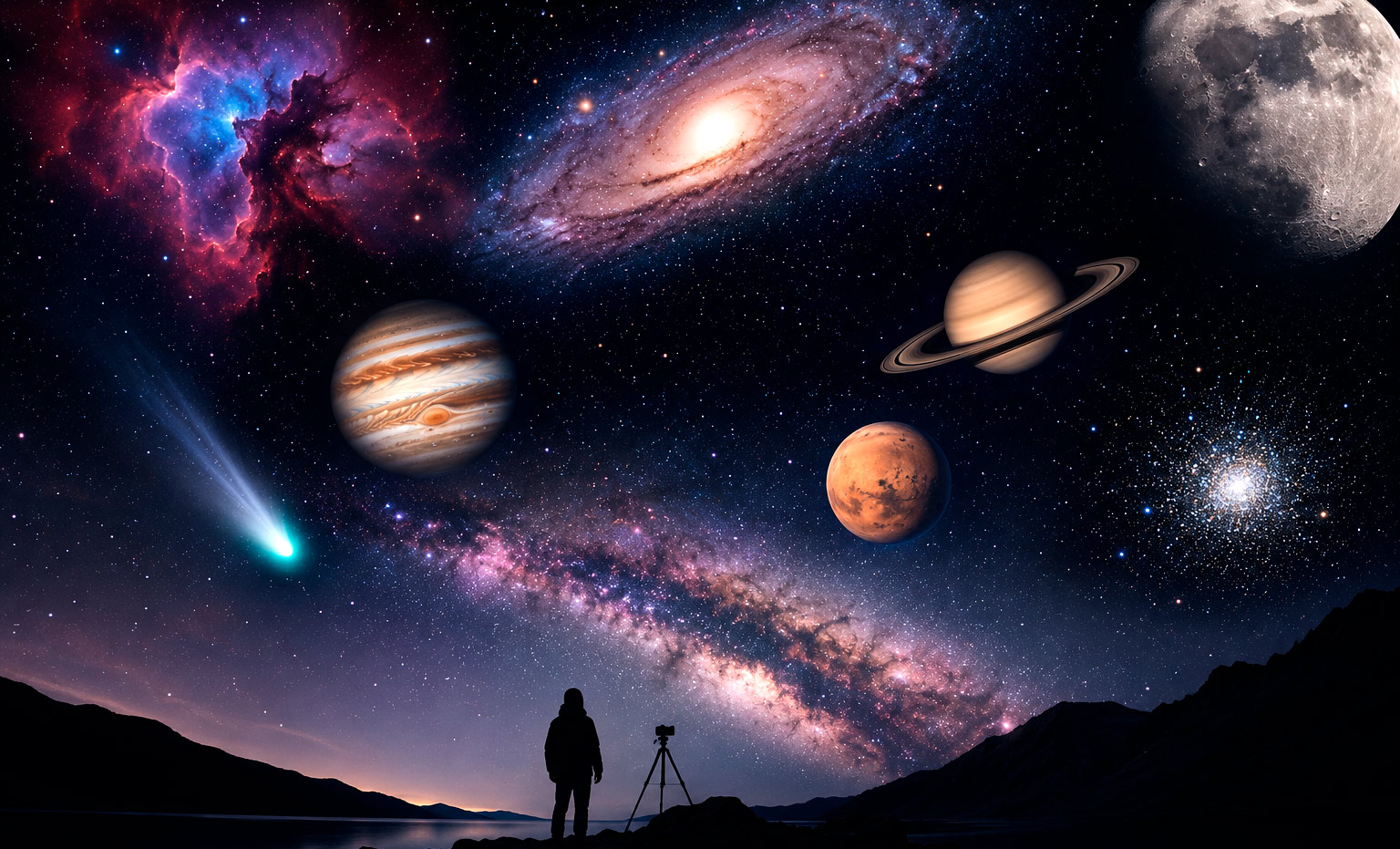
One of the most exciting aspects of astrophotography is the incredible diversity of objects waiting to be captured in the night sky. Depending on your equipment, location, and interests, you can photograph anything from planets in our own Solar System to galaxies millions of light years away.
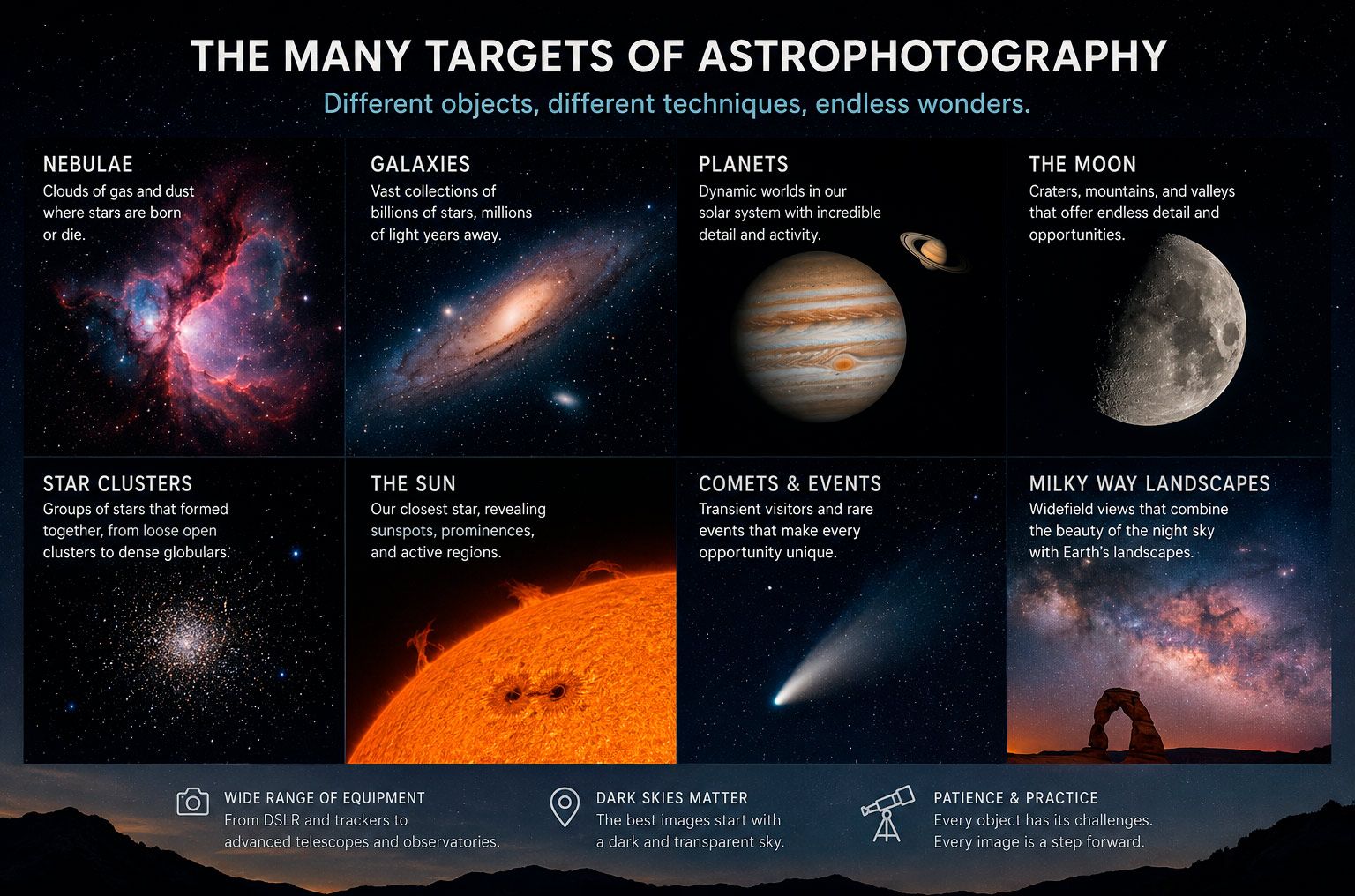
Nebulae
Nebulae are enormous clouds of gas and dust scattered throughout our galaxy. They are often among the most colorful astrophotography targets and can reveal regions where stars are being born or the remains of stars that have reached the end of their lives. Popular examples include the Orion Nebula, the Lagoon Nebula, and the Veil Nebula.
Galaxies
Galaxies are vast collections of stars, gas, dust, and dark matter. The Andromeda Galaxy is one of the most photographed targets for amateur astronomers, while smaller and more distant galaxies challenge imagers with longer focal lengths and advanced tracking systems.
Planets
Planetary imaging is a specialized branch of astrophotography focused on capturing fine details on Jupiter, Saturn, Mars, and other planets. Instead of long exposures, astrophotographers record thousands of frames and combine the sharpest ones to reveal cloud bands, rings, and surface features.
The Moon
The Moon is often the first target for beginners and remains a favorite even for experienced astrophotographers. Its craters, mountains, and valleys offer incredible detail, and it can be photographed successfully from almost any location.
Star Clusters
Star clusters are groups of stars that formed together. Open clusters such as the Pleiades are bright and easy to image, while globular clusters contain hundreds of thousands of stars packed into a relatively small region of space.
The Sun
With proper solar filters, astrophotographers can safely capture our closest star. Solar imaging can reveal sunspots, prominences, and dynamic activity that changes from day to day.
Comets and Other Transient Events
Comets, meteor showers, eclipses, and planetary conjunctions provide unique opportunities that may only occur once in a lifetime. These events often become some of the most memorable projects for astrophotographers.
Widefield Milky Way Photography
Not all astrophotography requires a telescope. Widefield images of the Milky Way combine the beauty of the night sky with landscapes on Earth, creating dramatic scenes that showcase our place in the universe.
Whether you are using a simple camera and tripod or a fully automated observatory, the night sky offers an endless variety of targets. Every object tells a different story about the universe, making astrophotography a hobby where there is always something new to discover and capture.