Understanding Nebulae: Which Types Exist and How to Photograph Them
Emission, reflection, dark, planetary and supernova remnants: the five families of nebulae, what makes each one glow, and how to capture them with a one-shot color camera.
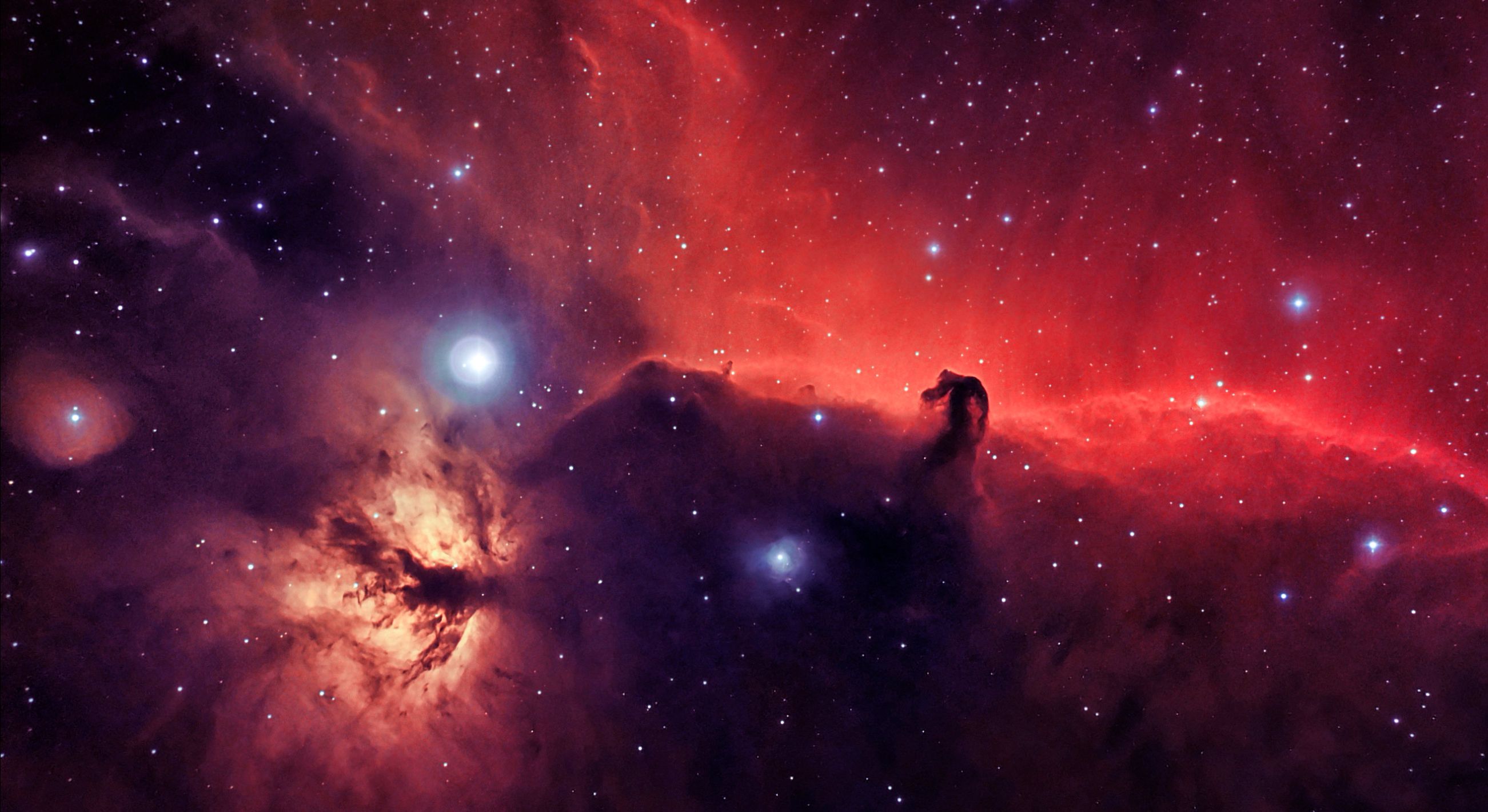
Nebulae are among the most rewarding targets in astrophotography. They come in different forms, colors, and structures, each revealing a different stage in the life cycle of stars. If you're imaging with a refractor and a one-shot color camera under Bortle 1 skies, you're in an ideal position to capture some of the most spectacular deep-sky objects visible from Earth.
Emission Nebulae
Emission nebulae are vast clouds of hydrogen gas energized by nearby stars. They are responsible for many of the iconic red and magenta astrophotography images seen online.
Popular examples:
Orion Nebula (M42)
Lagoon Nebula (M8)
Rosette Nebula
North America Nebula (NGC 7000)
Imaging Tips
These are excellent targets for color cameras. Under Bortle 1 skies, broadband imaging already delivers impressive results, but adding a dual-band filter can dramatically increase contrast and reveal finer hydrogen and oxygen structures.
Recommended focal length:
250mm to 600mm for large nebulae
600mm to 1000mm for smaller targets
Reflection Nebulae
Reflection nebulae do not emit light themselves. Instead, they reflect the light of nearby stars, often producing beautiful blue tones.
Popular examples:
Pleiades (M45)
Iris Nebula (NGC 7023)
Imaging Tips
Unlike emission nebulae, reflection nebulae should generally be captured without narrowband filters. Their light is broadband, and dark skies become your biggest advantage.
Bortle 1 conditions are particularly valuable here because the faint dust surrounding these objects can be difficult to reveal from brighter locations.
Long integration times are often more important than aggressive filtering.
Dark Nebulae
Dark nebulae are dense clouds of dust that block the light behind them. Instead of glowing, they appear as dramatic silhouettes against star fields and the Milky Way.
Popular examples:
Horsehead Nebula
Pipe Nebula
Dark dust lanes in the Rho Ophiuchi region
Imaging Tips
These targets thrive under pristine skies. Capturing them successfully depends on revealing subtle differences between the dust and the surrounding background.
Widefield refractors often excel here, especially when photographing large dusty regions near the Milky Way core.
Planetary Nebulae
Despite the name, planetary nebulae have nothing to do with planets. They form when dying stars shed their outer layers.
Popular examples:
Ring Nebula (M57)
Dumbbell Nebula (M27)
Helix Nebula
Imaging Tips
Most planetary nebulae are relatively small. Longer focal lengths help reveal structure, but even modest refractors can produce beautiful results on larger examples like the Helix and Dumbbell Nebulae.
Dual-band filters often work very well because these objects emit strongly in hydrogen and oxygen wavelengths.
Supernova Remnants
These are the expanding remains of exploded stars.
Popular examples:
Veil Nebula
Crab Nebula (M1)
Imaging Tips
The Veil Nebula is one of the best targets for a color camera paired with a dual-band filter. Its intricate oxygen filaments respond exceptionally well to narrowband techniques, even with one-shot color cameras.
Widefield refractors between 250mm and 500mm are often ideal.
Why Bortle 1 Changes Everything
Under Bortle 1 skies, astrophotographers gain access to faint dust, subtle color gradients, and weak structures that are often impossible to capture from suburban or urban locations.
While filters remain useful for emission targets, many objects such as reflection nebulae and dark nebulae are actually best photographed with little or no filtering, allowing the camera to collect the full spectrum of light.
In many cases, a high-quality refractor, a modern color camera, and several hours of integration under Bortle 1 skies can produce results that rival far more complex setups operating under light-polluted conditions.
The greatest advantage of dark skies is not necessarily brighter objects. It is the ability to capture the faint structures surrounding them, revealing the true scale and beauty of these cosmic clouds.