Galaxies: Capturing Island Universes Through Your Telescope
Light that left its source millions of years ago lands on your sensor tonight. What it takes to photograph galaxies, and which ones a wide-field rig captures best.
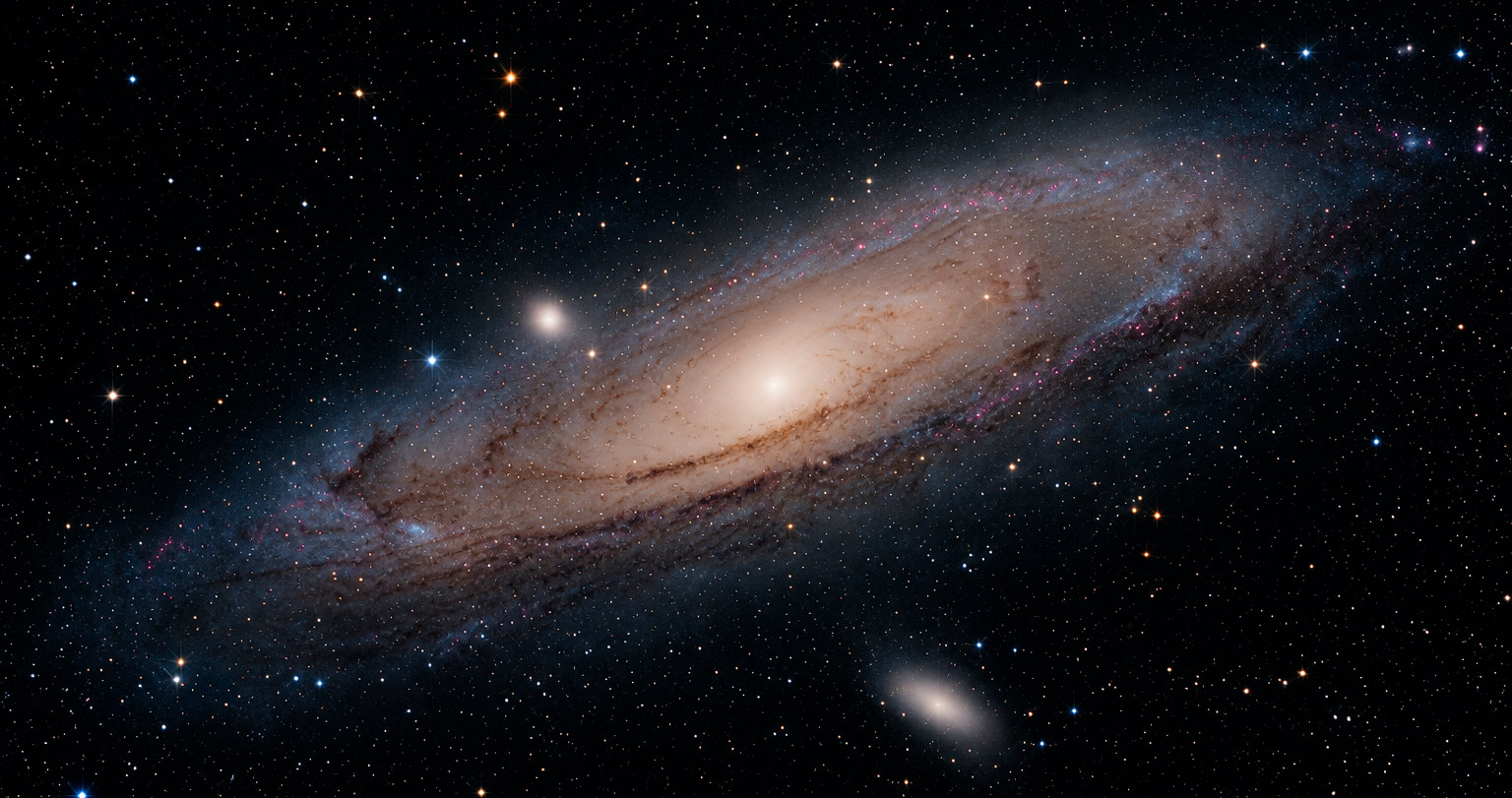
Few astrophotography targets inspire as much awe as galaxies. These immense collections of stars, gas, dust, and dark matter are the building blocks of the universe, each containing millions or even trillions of stars. When we photograph a galaxy, we are often capturing light that has traveled for millions of years before reaching our camera.
For many astrophotographers, galaxies represent the next challenge after mastering nebulae. Their intricate structures, dust lanes, and spiral arms reward patience, precise tracking, and long integration times.
Spiral Galaxies
Spiral galaxies are the most recognizable type, featuring beautiful arms winding around a bright central core.
Popular examples:
Andromeda Galaxy (M31)
Whirlpool Galaxy (M51)
Pinwheel Galaxy (M101)
Southern Pinwheel Galaxy (M83)
These galaxies often display blue star-forming regions, yellow cores, and dark dust lanes that create stunning contrast in astrophotographs.
Elliptical Galaxies
Unlike spirals, elliptical galaxies have a smooth, rounded appearance and contain relatively little gas and dust.
Popular examples:
M87
M49
Centaurus A (although it contains unique dust features)
While they may appear less dramatic at first glance, elliptical galaxies offer a glimpse into some of the oldest stellar populations in the universe.
Irregular Galaxies
These galaxies lack a defined structure and often appear distorted due to gravitational interactions with neighboring galaxies.
Popular examples:
Large Magellanic Cloud
Small Magellanic Cloud
Their chaotic appearance can reveal regions of intense star formation and fascinating cosmic history.
Imaging Galaxies with a Refractor and Color Camera
Galaxies are generally smaller targets than most nebulae, making focal length especially important.
Recommended setups:
400mm to 600mm for Andromeda and larger galaxies
700mm to 1200mm for medium-sized galaxies
Longer focal lengths for small and distant targets
Unlike many nebulae, galaxies are broadband targets. Under Bortle 1 skies, there is usually little benefit to using narrowband filters. Instead, allowing your color camera to collect the full spectrum of light will preserve natural galaxy colors and reveal faint outer structures.
Why Dark Skies Matter
The brightest parts of a galaxy are easy to capture. The real challenge lies in revealing the faint outer arms, tidal streams, and surrounding dust clouds.
Under Bortle 1 skies, these delicate features emerge much more easily. Long integration times combined with dark skies can uncover details that are often impossible to detect from suburban locations.
The Ultimate Deep-Sky Challenge
Galaxies offer a unique perspective on the scale of the cosmos. Nebulae show the birth and death of stars within our own Milky Way, but galaxies allow us to look beyond it, imaging entire stellar cities millions of light years away.
Every galaxy photograph is more than just an image. It is a snapshot of cosmic history, capturing ancient light that began its journey long before humanity existed. For many astrophotographers, that connection to the vastness of the universe is what makes galaxy imaging so rewarding.