Remote Astrophotography with N.I.N.A.: Automating Your Journey Through the Cosmos
How automation software like N.I.N.A. turns a full night of imaging into a sequence you set once and let run, from focus and guiding to dithering and the meridian flip.
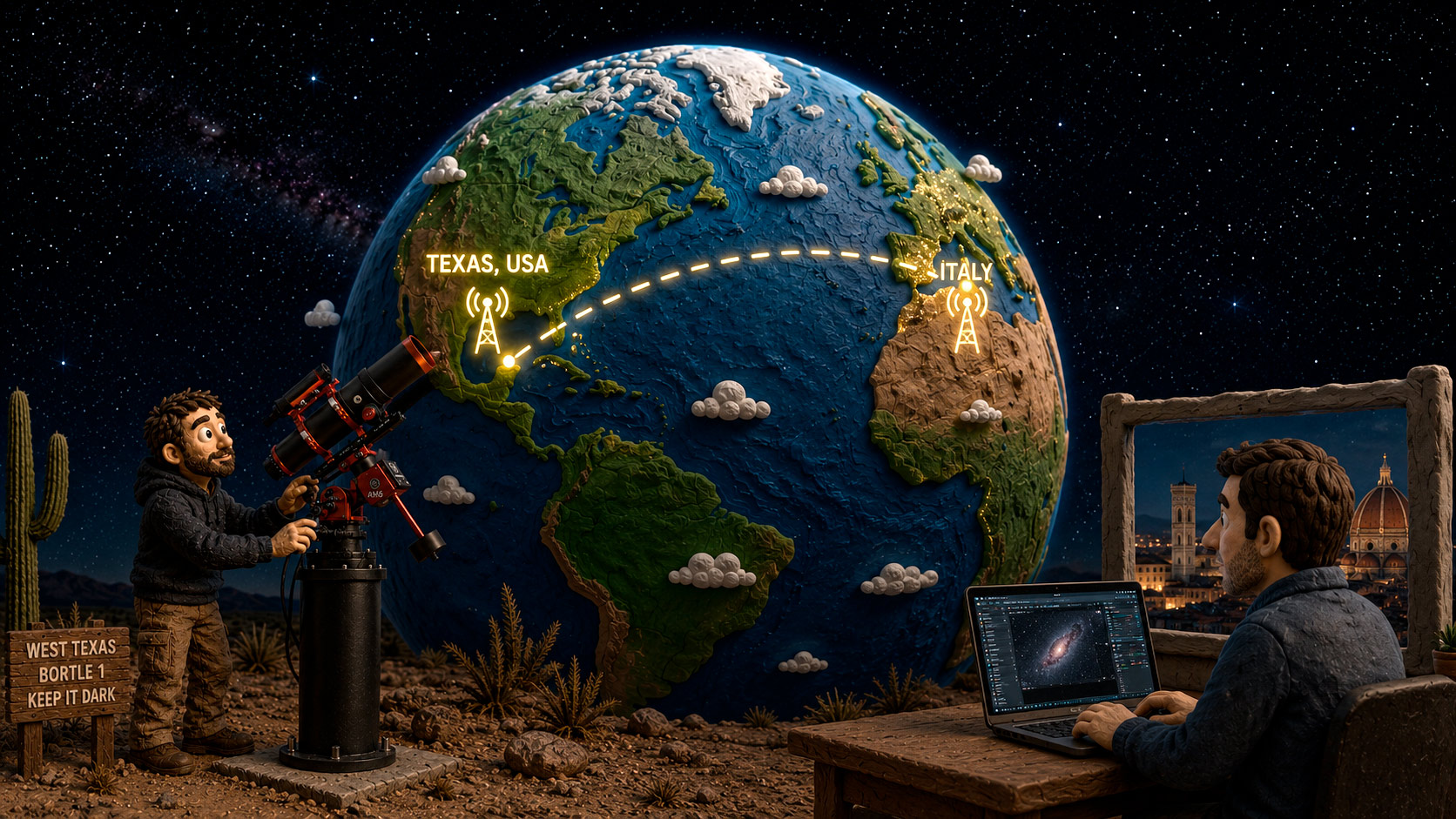
Modern astrophotography has evolved far beyond manually pointing a telescope and taking exposures. Today, many astrophotographers rely on automation software to manage entire imaging sessions, and one of the most popular platforms in the community is N.I.N.A. (Nighttime Imaging 'N' Astronomy).
Whether you're imaging from your backyard or operating a telescope at a remote observatory hundreds or thousands of miles away, N.I.N.A. has become one of the most powerful tools available for automating the entire astrophotography workflow.
What Is N.I.N.A.?
N.I.N.A. is a free astrophotography automation platform designed to control virtually every component of an imaging setup, including:
Telescope mounts
Astronomy cameras
Filter wheels
Motorized focusers
Rotators
Guide cameras
Observatories and roof systems
Its goal is simple: automate as much of the imaging process as possible so you can spend less time managing equipment and more time collecting data.
Why N.I.N.A. Is Ideal for Remote Imaging
When operating a telescope remotely, reliability becomes essential. You may be hundreds of miles away from your equipment, making manual intervention difficult or impossible.
N.I.N.A. helps solve this by automating critical tasks such as:
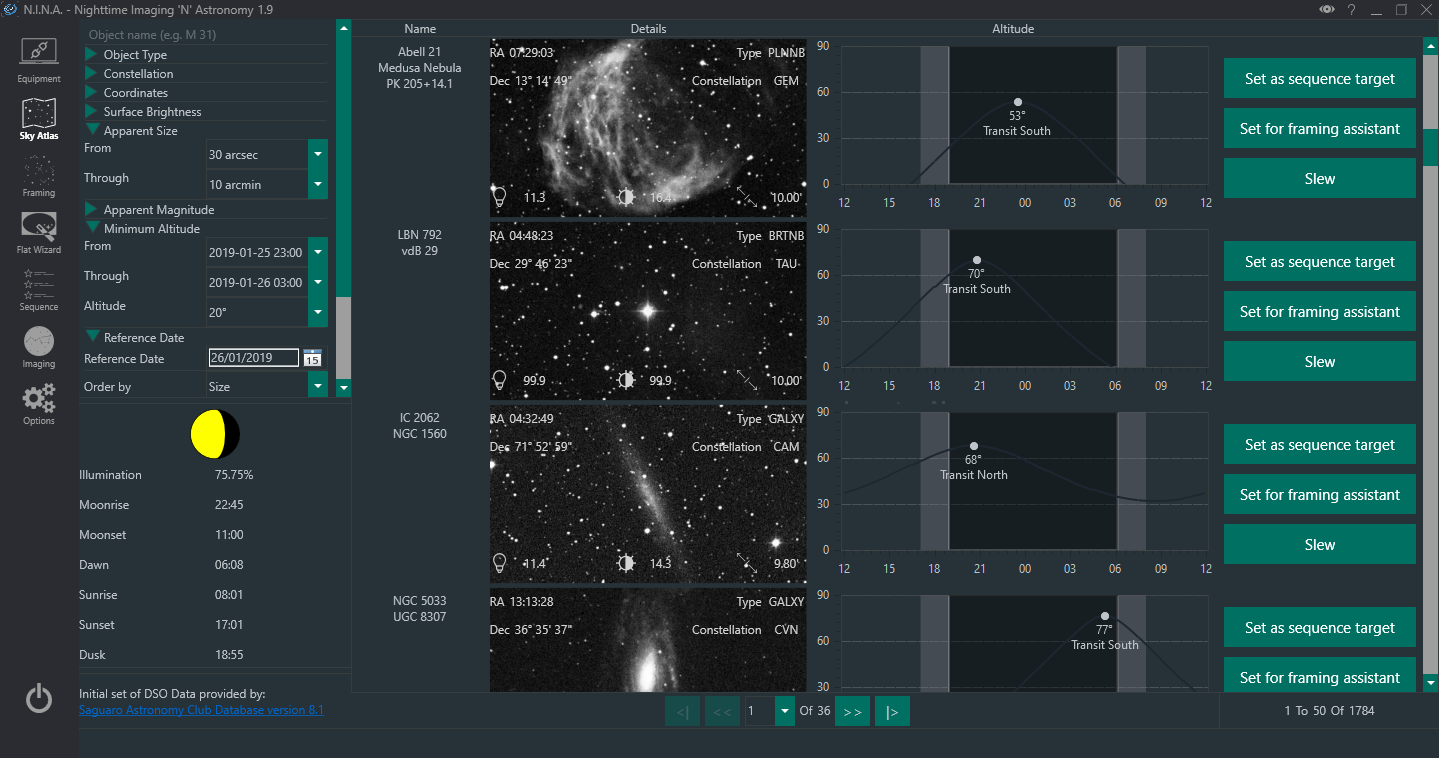
Automatic Target Acquisition
Simply select a target, and N.I.N.A. will slew the telescope, plate solve the image, and precisely center the object in the field of view.
Autofocus Routines
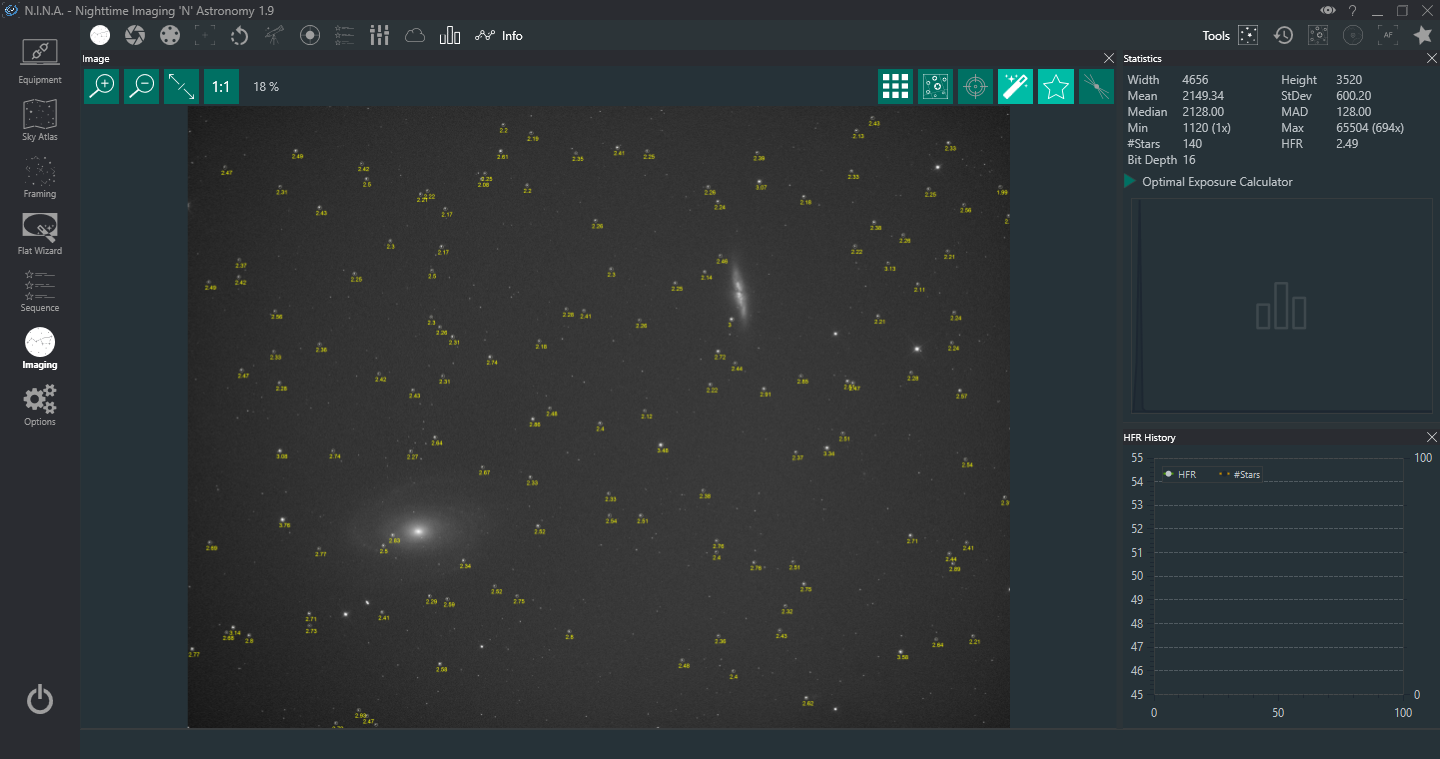
Temperature changes can shift focus throughout the night. N.I.N.A. can automatically refocus based on temperature, elapsed time, filter changes, or star quality metrics.
Meridian Flips
As targets cross the local meridian, N.I.N.A. can perform a fully automated meridian flip, re-center the target, restart guiding, and continue imaging without user intervention.
Advanced Sequencing
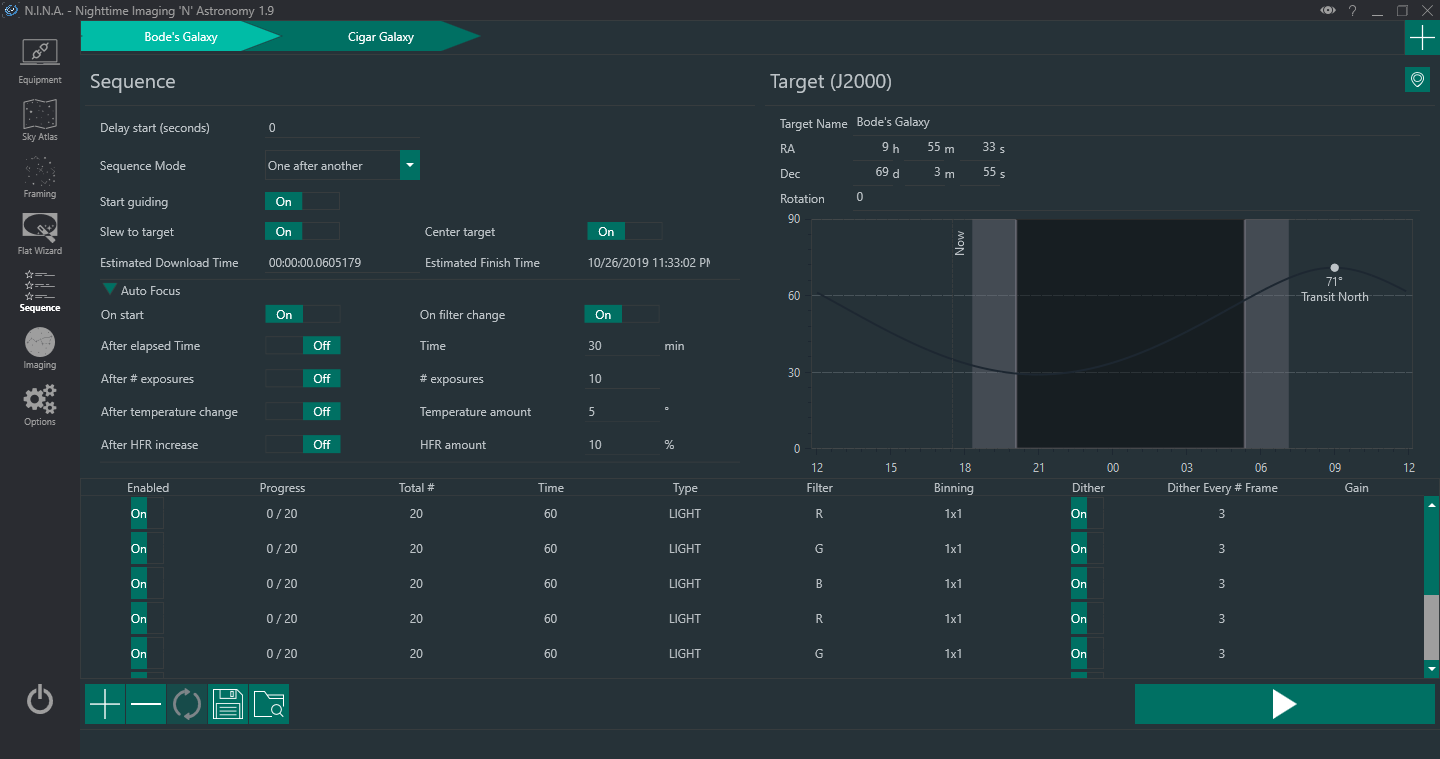
The Advanced Sequencer allows users to build sophisticated workflows that include:
Target switching
Filter changes
Autofocus triggers
Safety conditions
Observatory control
Automatic shutdown procedures
This flexibility has made N.I.N.A. one of the most powerful automation platforms available to amateur astrophotographers.
Plate Solving: The Secret Weapon
One of the most transformative features of N.I.N.A. is plate solving.
Rather than relying on perfect mount alignment, N.I.N.A. captures an image, compares the star pattern against astronomical databases, determines the exact pointing location, and automatically corrects the telescope's position.
The result is incredibly accurate framing, even when operating remotely.
Building a Fully Automated Observatory
Many remote imagers use N.I.N.A. as the central brain of their observatory.
A typical workflow may look like this:
Open the observatory at dusk
Cool the camera
Slew to the target
Plate solve and center
Run autofocus
Start guiding
Capture data throughout the night
Perform automatic meridian flips
Re-focus as needed
Park the mount
Warm the camera
Close the observatory before sunrise
All of this can occur without any human interaction.
Why N.I.N.A. Has Become So Popular
N.I.N.A. combines professional-level automation with an active community and a completely free licensing model. Its flexibility allows beginners to start with simple sequences while giving advanced users the tools needed to operate complex remote observatories.
For many astrophotographers, N.I.N.A. represents the bridge between hobbyist imaging and fully automated observatory operations.
As remote astrophotography continues to grow, N.I.N.A. remains one of the most important tools available for turning clear nights into productive imaging sessions, regardless of where your telescope is located.