What Bortle 1 Skies Let You Capture That Your Backyard Never Will
Why a dark sky is the one upgrade no camera or filter can replace, and what Bortle 1 lets you capture that a light polluted backyard never will.
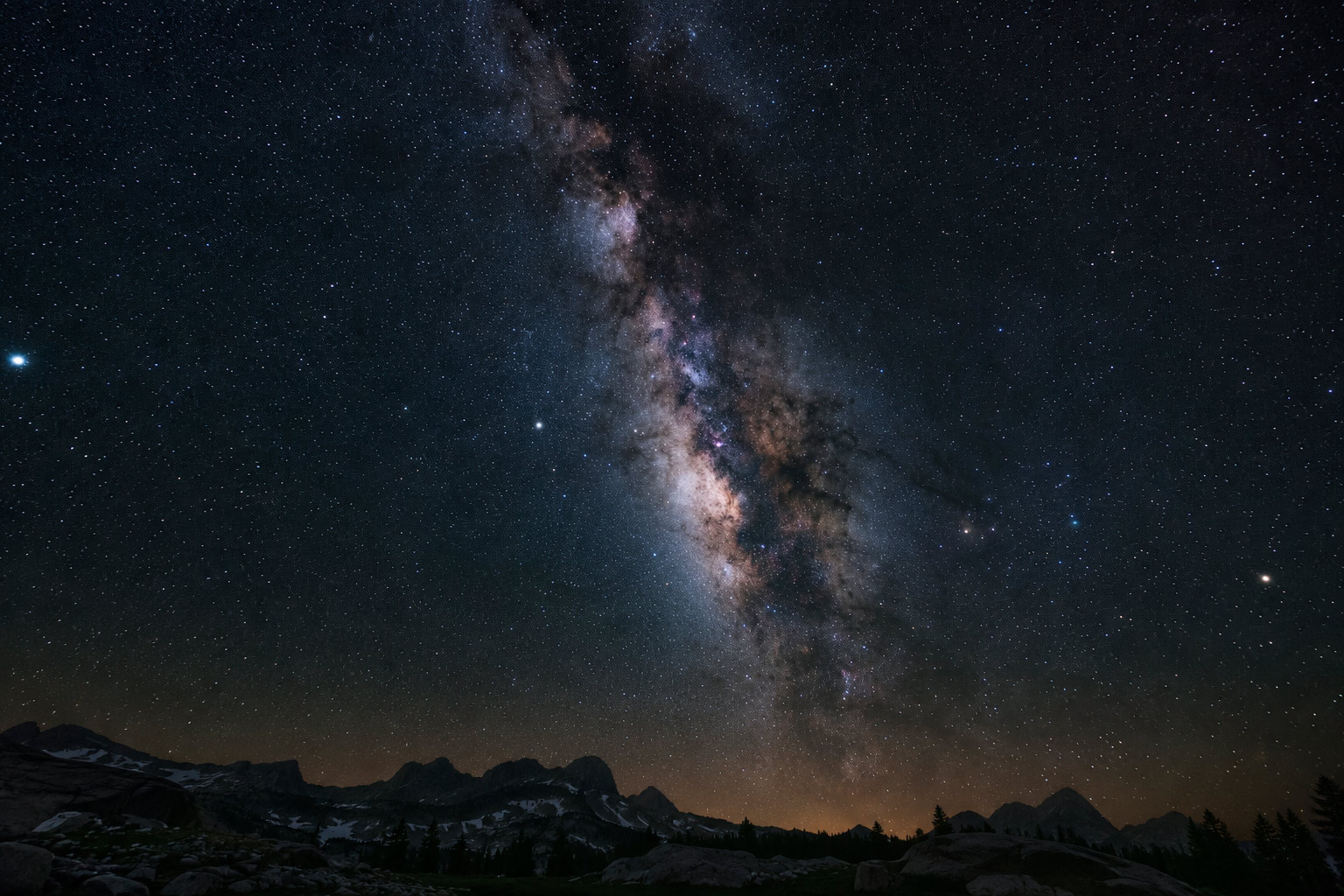
Light pollution is the one variable most astrophotographers can never fix from home. You can upgrade your camera, your mount, and your filters, but if the sky above your backyard glows orange, much of the faint signal you are chasing is gone before it reaches your sensor. This is why the same target can look flat and noisy from a city and rich and three dimensional from a truly dark site.
The Bortle scale in plain terms
The Bortle scale rates night sky darkness from Class 9, an inner city, to Class 1, the darkest skies on Earth. Most people live and image under Class 6 to Class 9, where the Milky Way is invisible to the naked eye. Class 1 is a different world. The Milky Way casts shadows, and the sky between the stars is genuinely black rather than a dim gray wash.
That black background is the whole point. In astrophotography you are not fighting for brightness, you are fighting for contrast between your target and the sky behind it. The darker the background, the more of your target you can pull out of it.
What dark skies actually buy you
Fainter detail, sooner. Under Bortle 1 the background is so low that faint outer structure in nebulae and galaxies appears in a fraction of the integration time you would need from the city.
Cleaner color. Light pollution adds a strong color cast you have to fight in processing. Remove it at the source and the real colors of your target survive.
Broadband targets become possible. Galaxies, reflection nebulae, and star clusters emit across the whole spectrum, so narrowband filters do not help them. Dark skies are the only real solution, and they are exactly where these targets come alive.
Less time, more keepers. More signal per minute means a single night can produce an image that would take many nights to match from a light polluted backyard.
What gear cannot fix
Dual-band and narrowband filters are excellent for emission nebulae, and they can rescue some targets from light pollution. But they only pass two or three narrow slices of light, so they do nothing for the broadband targets above. There is no filter that turns a Bortle 8 sky into a Bortle 1 sky for a galaxy. The faint outer halo of Andromeda, the dust around the Pleiades, the subtle tidal streams between interacting galaxies: those need a genuinely dark background, not more equipment.